Cross-cultural fluency for today's workplaces
About Culture Creek Australia
Culture Creek Australia is a family-owned consultancy and training business helping healthcare and care organisations build culturally aware, connected teams through practical communication and safety-focused learning.
Our programs are shaped by over a decade of lived cross-cultural experience, working, training, and raising a family across cultures and continents. We understand the challenges of adapting to new systems, communication styles, and workplace expectations because we've lived them firsthand.
As Australia's health, aged care, and disability sectors welcome thousands of internationally trained clinicians and care workers each year, we help organisations bridge cultural gaps that can affect teamwork, communication, and safety, supporting both newcomers and the teams they join.
Our approach is practical, respectful, and grounded in shared Australian workplace values: fairness, mateship, humility, and a fair go for all. We focus on building understanding that improves connection, confidence, and safe practice at work.
Our training supports organisations in meeting communication and partnership expectations across diverse workforces.
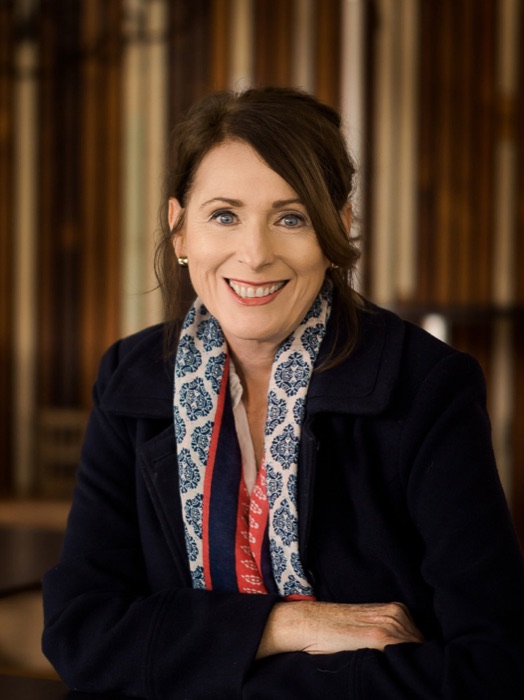
Founder of Culture Creek Australia,
Cindy McGarvie.
About Cindy McGarvie
Culture Creek grew out of Cindy's lifelong fascination with people, culture and communication.
She trained as a nurse in the Australian Army and served for seven years, most of it in operating theatres, with her final year spent as a nurse trainer. Theatre is an unforgiving environment for communication. It runs on hierarchy, precision and short verbal exchanges under pressure, which is much the same set of conditions that makes a cultural misunderstanding dangerous anywhere else in a hospital. The Army also gave her the leadership and discipline she later brought to running an organisation.
She then spent many years living and working across cultures, where she saw firsthand how deeply culture shapes the way people communicate, solve problems, respond to authority, express care and build trust.
Over time, she became increasingly aware that many workplace tensions and misunderstandings are not caused by bad intentions, but by different cultural assumptions colliding under pressure, especially in healthcare environments.
That interest is not only lived, it is formally trained. Cindy holds an Associate Diploma of Social Science in Applied Linguistics from the Summer Institute of Linguistics (SIL) South Pacific School, and has also studied anthropology at Deakin University. Between them, these are the disciplines concerned with how language, culture and meaning act on one another. It is the reason Culture Creek's training keeps returning to interpretation and worldview rather than to customs and etiquette. She is also CELTA qualified in teaching English to speakers of other languages, which matters in workplaces where a good deal of the workforce is doing skilled, high-stakes work in a second language.
Alongside her healthcare background, Cindy also spent more than a decade as CEO of a national youth organisation, giving her extensive experience in people management, team leadership, mentoring and organisational dynamics. This combination of leadership experience and cross-cultural insight shapes Culture Creek's practical, relational approach to training and coaching.
Through Culture Creek, Cindy now helps organisations and their teams, both internationally trained and Australian-born, navigate cultural differences with greater clarity, confidence and competence in Australian workplace settings.
Her approach combines practical communication strategies with a deeply human understanding of the challenges people face when adapting to a new culture, workplace and way of life.
Qualifications
- Associate Diploma of Social Science in Applied Linguistics, SIL South Pacific School
- Studies in anthropology, Deakin University
- CELTA Level 4, Teaching English to Speakers of Other Languages, RMIT University
- Certificate IV in Training and Assessment, EquipGrowLead, Queensland
- Qualified coach
- Nursing background: seven years in the Australian Army, operating theatre nursing and nurse training
Where the training experience comes from
Culture Creek is a young business, but the training behind it goes back a long way. Cindy was delivering cross-cultural training years before she founded it, with more than a decade as a CEO in Australia sitting between the two.
That earlier work began with medical teams preparing for Uganda and Tanzania. These were doctors, nurses and support staff who were highly capable at home and about to work in settings where consent, pain, family authority and everyday courtesy all carried different meanings from the ones they assumed. Groups were usually around twenty people, and sessions ran from an hour to a full day depending on the time an organisation could give.
The work was never limited to clinical teams. Linguists, teachers, accountants and technical specialists relocating to live and work in East Africa needed the same preparation, because the underlying skill is not a medical one. It is the ability to see your own cultural assumptions before they cost you a relationship, a project, or a good staff member.
It also ran in the other direction. Cindy designed and delivered a program for African staff working alongside Western colleagues, helping them recognise how culture and worldview were shaping communication on both sides of the working relationship. Training only the newcomer has never been the whole answer, and that principle is now built into everything Culture Creek does.
Underneath all of it sat twelve years of living and working in East Africa, in an organisation whose staff came from fifteen different nationalities, where misunderstanding was a daily operating condition rather than an occasional problem.
Cindy McGarvie's work has been the single greatest help to me in understanding how a person's World View informs their thoughts and feelings, words and actions.
The setting has changed since. Rather than preparing people to work in East Africa, Culture Creek now works with Australian health, aged care and disability teams as they welcome clinicians and carers trained in other systems. The skill being taught is the same one, and it still runs in both directions, whether it is delivered as a workshop for a whole team, one-to-one coaching, or an online course staff can work through at their own pace.
This is not DEI training
Many organisations have already delivered diversity, equity and inclusion programs. These have value, but they typically focus on awareness of difference, protected categories and compliance. They tell people what to notice. They rarely change how people communicate.
Culture Creek's approach is different. Rather than delivering information about other cultures, we help people recognise how their own cultural assumptions are shaping the way they communicate, interpret behaviour and make meaning, often invisibly.
This is guided reflective development, not a one-off diversity activity. It draws on intercultural communication theory, psychological safety principles and the lived experience of working across cultures. The goal is not awareness as an outcome. It is changed communication and safer, more connected teams.
For healthcare and care organisations, that distinction matters. Knowing that culture affects communication is not the same as understanding how it is affecting your team, and knowing what to do about it.
Our philosophy
At Culture Creek, we see diversity not as a program or agenda, but as the everyday reality of modern Australian life.
We value the spirit that has long defined Australian life: fairness, mateship, respect, humility, and a fair go for all. When people understand each other's ways of working, communication improves, teams connect, and everyone is better able to contribute.
Inclusion isn't a slogan. It's a daily practice built on understanding, humility, and shared purpose.

Contact Us
Let's build understanding, not just teams.
We'd love to talk about what cultural fluency could look like in your workplace.