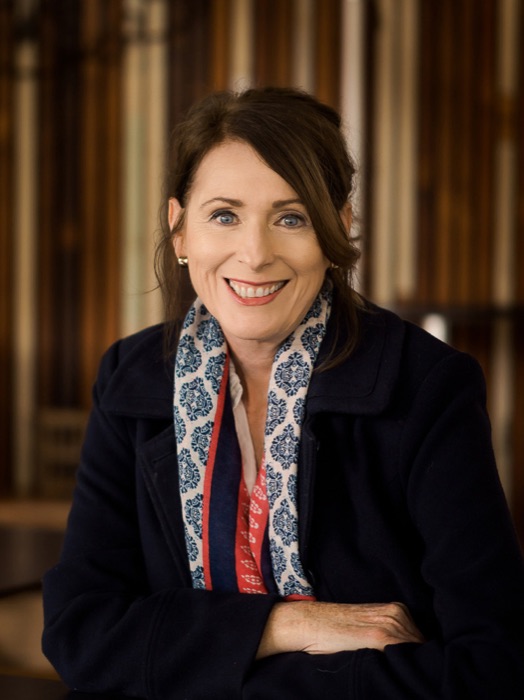
When I first became a CEO, I had no idea how much I would be responsible for, or how heavily that responsibility would sit on me every day. Compliance was not only health and safety. It reached into areas I understood only vaguely, and into some I did not know existed. I loved leading. I found real purpose in serving the people in my team. But that joy was always being pulled against by the fear of something going wrong, or of someone doing something they should not.
Every quarter I reported to the board on how I was managing risk. So I built a risk register, a very large one, and rated every risk on it. Once a year the board reviewed it, and every year we added more risks. I came to dread that time of year. My stress went up as the review came closer, and the register only ever grew.
The organisation was small. We did not have the budget for a large administrative team or a dedicated HR department. Whatever the register held, I held.
If you manage people in a small practice, an aged care home or a community service, you may recognise some of this. This article is about how that fear builds, what it does to the way you see your staff, and what three thinkers from the field of safety science offer instead. It is the thinking that changed how I led.
How fear changes the way you see your staff
One day a staff member took the work vehicle out on an errand. As she drove past a council mower working on the grassed median strip, the mower threw up a nut lying in the grass. Her window was down. It struck her in the eye. She managed to pull over, and she spent weeks in hospital and many months in treatment afterwards.
My first concern was for her, and it should have been. The injury was serious and she deserved every bit of care we could give. It was rightly reported to the state safety regulator, and what followed was a long investigation into our safety practices and our safety manual.
But it was a freak accident. No risk register I could have written would have had a line for a nut, a mower and an open window on an ordinary errand. And what it did to me as a leader was quietly corrosive. If something that unforeseeable could happen, then anything could. I became more watchful, more wary and, if I am honest, more jittery. Each incident, each compliance issue, added another layer. I was enjoying my work and my people less, and guarding against them more.
This is the trap. When every possible harm feels like yours to prevent, the people in your team stop looking like the reason the organisation works. They start looking like the main source of risk, the variable you cannot control. You add rules. You check more. You trust a little less. In a small organisation with no quality team, there is no one to share that weight with.
Then one day I read an article by an expert in safety and risk. I no longer remember his name. I remember the feeling. As I read, the fear began to fall away and something like peace took its place. I could not control everything, and I never would. But I could put sound structures in place and keep them up, and that would keep risk low. And I could believe in my team, rather than seeing them as the cause of my worry.
I have since found the same ideas in three writers whose work I wish I had read sooner.
Three safety thinkers, one shift
Erik Hollnagel: look at what goes right
Erik Hollnagel, writing with Robert Wears and the Australian health researcher Jeffrey Braithwaite, describes two ways of thinking about safety.1 The first, which they call Safety-I, defines safety as a state where as few things as possible go wrong. You investigate failures, find the cause, and add a rule or a barrier. In this view, people are mainly a liability, because they are the most variable part of any system.
Their point is that this misses almost everything. If something fails one time in ten thousand, it goes right the other 9,999 times, and almost nobody studies those. Things go right, they argue, not because people follow the procedure exactly, but because people adjust what they do to match the real conditions in front of them. They distinguish work-as-imagined, the way policies say work should happen, from work-as-done, the way it actually happens. The gap between the two is not usually negligence. More often it is skill.
So they propose Safety-II: moving from ensuring “as few things as possible go wrong” to ensuring “as many things as possible go right”.1 People become a resource, not a hazard. Importantly, they do not throw out incident investigation. They argue for doing both.
Todd Conklin: your staff are problem solvers
Todd Conklin, an American safety researcher, makes the same turn from a different direction. He describes how safety was once something done to workers, who “needed to be fixed, needed to be made better”.2 His work starts from a different assumption: people come to work wanting to do a good job.
When something goes wrong, then, the first question is not who made the bad choice. It is what in the system made that choice look reasonable at the time. Goal conflicts, poor systems and risks nobody had named sit behind most mistakes. Conklin’s summary of the shift is simple: the new view “sees the employee not as problem to be fixed, but as problem solver”.3
Sidney Dekker: compliance is not the same as safety
Sidney Dekker, based at Griffith University in Brisbane, coined the phrase “Safety Differently”.4 He argues that the drive towards zero harm has produced ever-growing safety bureaucracy, and that measuring safety mainly by low incident numbers can mislead. When people are held to low numbers, under-reporting follows, and an organisation can look safe right up until it is not.
His alternative has three parts. People are the solution, not the problem. Change the conditions of work rather than trying to control the worker. And measure the presence of what makes work go well, not only the absence of harm. Reading Dekker, I recognised my own risk register: a document that only ever grew, recording what might go wrong and almost nothing about what was keeping us safe.
What this looks like on a Monday morning
None of this asks you to care less about safety. It asks you to look in a different place as well. In a health or care setting, that can be as practical as this.
- Add one question to the risk review. Alongside “what could go wrong?”, ask “what are we already doing well that protects us, and how do we make sure we keep doing it?”
- Hold learning conversations, not only investigations. After an incident, ask the people closest to it what made the work hard that day. You will learn more about your systems than a search for the person at fault will tell you.
- Ask how the work really gets done. Your carers, nurses and reception staff are closing gaps between policy and reality every shift. Find out where. Some of those adaptations are your best safety practice, and some point to a policy that needs to change.
- Read the psychosocial hazard list the other way. The psychosocial hazards that work health and safety law asks you to manage include poor support, low role clarity, poor workplace relationships, little recognition and unfair treatment.5 Turned around, that list describes a team people want to stay in. Most teams already have some of it. Find it, protect it, and build from there.
- See your overseas recruits as capable adults adapting, not as a risk to manage. An internationally trained nurse or doctor learning a new health system is doing exactly what Hollnagel describes: adjusting to unfamiliar conditions. Supporting that adjustment well is safety work, and it is also what keeps people from leaving.
What this does not mean
It does not mean the legal duties go away. In NSW, for example, the psychosocial hazards code of practice became an enforceable benchmark on 1 July 2026, and providers are expected to manage those risks using the hierarchy of controls. Structures matter. Policies, training, reporting and review all still have their place, and I kept every one of them.
What changed for me was not the structures. It was the posture behind them. A safety approach that also pays attention to what goes right can help an organisation meet its obligations with a clearer view of where its real risks sit, and with staff who are more likely to speak up, because they are trusted rather than watched.
Peace without control
I never did get my risk register down to nothing, and I would not have wanted to. But I stopped dreading the board review. I understood at last that I could not control everything, and that this was never my job. My job was to put good structures in place, keep them up, and trust the people I had chosen to work with.
If you carry that weight in a small organisation, without a quality team or a large HR department behind you, I hope you can put some of it down. Your staff are not the hazard. Most days, they are the reason things go right.
If you would like to talk about building that kind of culture in your team, book a conversation.
References
-
Hollnagel, E., Wears, R. L. and Braithwaite, J. (2015). From Safety-I to Safety-II: A White Paper. The Resilient Health Care Net. University of Southern Denmark, University of Florida and Macquarie University. Read the white paper. ↩ ↩2
-
Canadian Centre for Occupational Health and Safety (n.d.). Human Factors and Performance with Todd Conklin [podcast transcript]. Read the transcript. ↩
-
Business Insurance (2017). Human behavior at center of workplace safety debate, 22 June. Read the article. ↩
-
Dekker, S. (2014). Safety Differently: Human Factors for a New Era. 2nd edn. Boca Raton, FL: CRC Press. ↩
-
SafeWork NSW (2021). Code of Practice: Managing Psychosocial Hazards at Work. Sydney: SafeWork NSW. Read the code. ↩